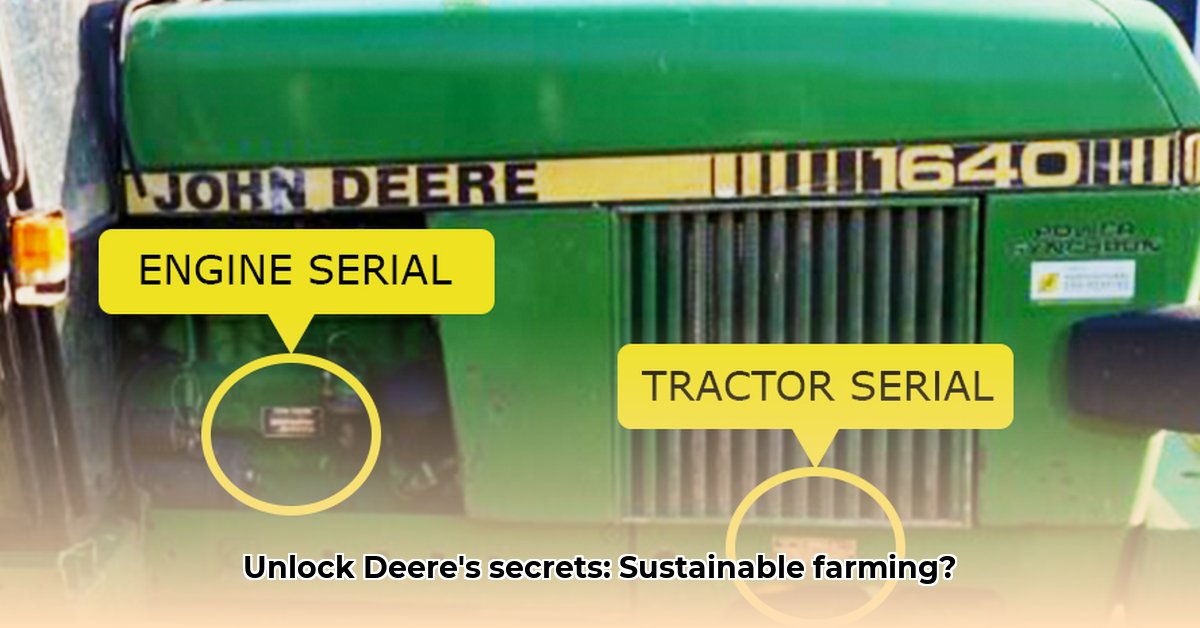
John Deere Tractor Numbers: A Legacy of Innovation
John Deere tractors are iconic symbols of American agriculture, their green and yellow hues synonymous with hardworking farmers across the globe. But the numbers stamped on these machines tell a much deeper story—one of continuous innovation and a growing commitment to sustainable farming practices. This article explores the history embedded in those numbers, examining how John Deere’s technological advancements have shaped modern agriculture and its ongoing role in creating a more environmentally responsible future. We'll uncover the evolution of Deere tractors, from their humble beginnings to their current position at the forefront of precision agriculture. For more detailed historical information on older models, check out this resource on older John Deere tractors.
From Steel Plows to Precision Farming: A Historical Perspective
John Deere's journey began with the invention of the self-scouring steel plow in 1837. This simple innovation, while lacking a model number, laid the foundation for the company's future success. Early 20th-century models like the Model D (a true workhorse of its time) revolutionized farming efficiency. Each subsequent model number, from the 4020 with its integrated hydraulics to the larger, more powerful 8010, marked substantial technological leaps. These advancements, however, often came with increased fuel consumption and a larger environmental footprint. This presented a challenge that Deere wouldn't fully address until embracing the principles of precision farming.
How did the shift to precision farming impact the overall efficiency and sustainability of John Deere tractors? It radically reduced resource wastage and improved yield.
Precision Farming: Optimizing Resource Use
Modern John Deere tractors, exemplified by the 8R series, represent a paradigm shift. The numbers now signify not just horsepower but a commitment to precision farming strategies. The incorporation of GPS-guided systems, automated steering, and variable-rate technology allows farmers to target resources—water, fertilizers, pesticides—precisely where needed, substantially reducing environmental impact. This translates to higher yields with lower resource consumption, a key component of sustainable agriculture.
However, a significant hurdle remains: the high initial investment cost of precision farming technology. Are there any initiatives to address this financial barrier to wider adoption? Further research into financing options and government subsidies aimed at encouraging small-scale farmers to adopt these technologies is essential for realizing the full potential of precision agriculture.
Challenges and Opportunities: Navigating the Future of Sustainable Agriculture
The path to sustainable agriculture is fraught with challenges. Intense competition, increasingly stringent regulations, and growing consumer demand for environmentally friendly produce all pose significant hurdles for John Deere and the agricultural industry as a whole.
"The agricultural technology sector is incredibly competitive," says Dr. Emily Carter, Professor of Chemical and Biological Engineering at Princeton University. "Companies like John Deere must constantly innovate to stay ahead, while also addressing the crucial need for sustainable practices."
Yet, significant opportunities abound. The global demand for sustainably produced food is rapidly growing, creating immense potential for companies that can effectively integrate sustainable technologies into their operations. John Deere, with its technological expertise, extensive dealer network, and strong brand recognition, is well-positioned to capitalize on this opportunity.
The Future of Sustainable Farming: A Data-Driven Approach
The future of sustainable agriculture will undoubtedly be data-driven. Sophisticated sensors, advanced analytics, and AI-powered decision-making tools will play a crucial role in optimizing resource use and minimizing environmental impact. Will John Deere continue to lead this technological charge? Only time will tell, but their current investments in R&D, coupled with their commitment to precision agriculture, suggest a strong likelihood. The story of John Deere tractor numbers is a story of continuous adaptation, innovation, and a commitment to shaping a more sustainable future for agriculture. The numbers themselves, therefore, are not merely identifiers, but rather milestones marking progress on a path toward a greener tomorrow.